

Which German Phrases Do You Need for the B1 Speaking Exam?
The B1 speaking exam is one of the most nerve-wracking parts of any German certification journey, and for good reason. Unlike written tests, speaking requires you to think on your feet, structure your thoughts quickly, and sound natural under pressure. Whether you’re preparing for the Goethe B1 or the telc B1 speaking exam, having the right phrases ready can make a significant difference. This guide walks through the most useful German phrases for B1 level, organized by the exact situations you’ll face in the exam room.
What the B1 Speaking Exam Actually Tests
The B1 speaking exam is not just a vocabulary check. Examiners are assessing your ability to communicate meaningfully in everyday situations, describing what you see, sharing your perspective, negotiating with a partner, and keeping the conversation moving even when you’re unsure of a word. Both the Goethe B1 and telc B1 formats typically involve two or three tasks: a picture description or situation task, a discussion where you express and defend opinions, and a collaborative task where you make suggestions and reach an agreement with another candidate.
The key thing examiners look for is communicative competence, not perfection. A well-placed linking phrase, a confident opinion opener, or a smooth way of asking for clarification can all boost your score, even if your grammar isn’t flawless. That’s why investing time in German exam preparation that focuses specifically on spoken language is so valuable at this level.
Essential Phrases for Describing Pictures and Situations
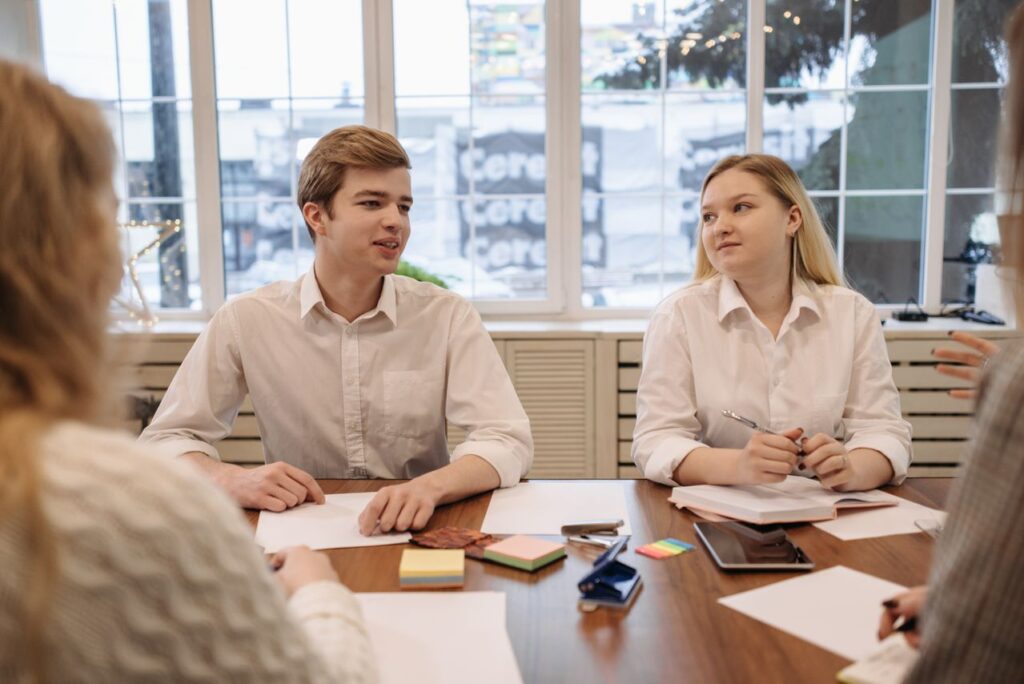
Picture description is a standard task in the German B1 speaking exam, and examiners want to hear structured, specific language, not just a list of objects. Start by setting the scene, then move to details, and finish with an interpretation or guess about what’s happening.
- Auf dem Bild sehe ich… (In the picture I can see…)
- Im Vordergrund / Im Hintergrund… (In the foreground / In the background…)
- Es scheint, als ob… (It seems as if…)
- Ich vermute, dass… (I suspect that…)
- Das Foto zeigt wahrscheinlich… (The photo probably shows…)
- Man kann erkennen, dass… (You can tell that…)
Avoid simply naming objects. Instead, connect what you see to a broader context, for example, “Im Vordergrund sehe ich eine Frau, die lächelt. Ich vermute, dass sie gerade gute Nachrichten bekommen hat.” This kind of interpretation shows the examiner that you can use German to reason and communicate, not just describe.
Phrases for Expressing Opinions and Agreeing or Disagreeing
Expressing opinions clearly and responding to someone else’s point are central to the B1 speaking exam. The goal is to sound engaged and confident, not robotic. These phrases help you do exactly that.
- Meiner Meinung nach… (In my opinion…)
- Ich bin der Ansicht, dass… (I am of the view that…)
- Das stimmt, aber… (That’s true, but…)
- Ich sehe das etwas anders. (I see that a little differently.)
- Da bin ich ganz Ihrer / deiner Meinung. (I completely agree with you.)
- Ich finde das interessant, aber ich denke, dass… (I find that interesting, but I think that…)
When disagreeing, always soften your response before presenting your own view. Jumping straight into a contradiction can sound abrupt and may actually count against your communicative style score. A phrase like “Das stimmt, aber ich finde…” keeps the exchange natural and respectful, which is exactly what examiners want to see in a collaborative speaking task.
In the following video, we’ll show you how to express your opinion in German using useful everyday expressions. You’ll also get to practise your listening skills with a fun comprehension exercise.
Phrases for Making Suggestions and Reaching a Compromise
In the collaborative task, you and your exam partner need to work toward a shared decision. This means suggesting ideas, responding to your partner’s suggestions, and finding common ground, all in German. Having a small toolkit of phrases for this makes the whole exchange feel much more controlled.
- Wir könnten… (We could…)
- Was hältst du davon, wenn wir…? (What do you think about us…?)
- Ich schlage vor, dass wir… (I suggest that we…)
- Das klingt gut, aber vielleicht wäre es besser, wenn… (That sounds good, but maybe it would be better if…)
- Können wir uns darauf einigen, dass…? (Can we agree that…?)
- Ich denke, das ist ein guter Kompromiss. (I think that’s a good compromise.)
The key in this task is to keep the dialogue moving. If you hit a wall, use bridging phrases like “Lass uns kurz überlegen…” (Let’s think for a moment…) to buy yourself a second without losing the floor. Reaching a conclusion together, even an imperfect one, shows collaborative language ability.
Linking Words and Filler Phrases That Boost Fluency
Fluency at B1 level doesn’t mean speaking without pauses, it means managing those pauses intelligently. Linking words connect your ideas and show logical thinking, while filler phrases give you a moment to gather your thoughts without going completely silent.
Useful linking words
- Außerdem (In addition)
- Deshalb / Deswegen (That’s why / Therefore)
- Obwohl (Although)
- Einerseits… andererseits… (On the one hand… on the other hand…)
- Zum Beispiel (For example)
Natural filler phrases
- Also, ich würde sagen… (Well, I would say…)
- Moment mal, ich überlege kurz… (Just a moment, let me think…)
- Wie soll ich das sagen… (How should I put this…)
- Das ist eine gute Frage. (That’s a good question.)
Using einerseits… andererseits is especially effective when discussing a topic with two sides, it immediately signals to the examiner that you can structure a balanced argument, which is a hallmark of B1 communicative competence.
Common Mistakes to Avoid on Exam Day
Even well-prepared candidates lose marks through avoidable habits. Knowing what to watch out for is just as important as knowing the right phrases.
- Going silent instead of paraphrasing: If you can’t remember a word, describe it instead. “Das Ding, mit dem man schreibt…” (The thing you write with…) is far better than a long pause.
- Ignoring your partner: In the collaborative task, the examiner is watching how you interact. Acknowledge your partner’s ideas before presenting your own.
- Repeating the same phrases: Using “Ich denke” for every opinion sounds monotonous. Vary your openers across the different phrases listed above.
- Translating directly from your first language: German sentence structure is different. Practice building sentences in German from the start, not translating as you speak.
- Speaking too fast when nervous: Speed often leads to more errors. A slower, clearer pace with good linking words sounds far more confident than rushed speech.
One final point: don’t aim for perfection. The B1 level is about functional communication, and minor grammatical errors won’t disqualify you. What matters most is that your message gets through clearly and that you engage actively with the tasks and your partner.
How lingoni Helps You Prepare for the B1 Speaking Exam

Knowing the right phrases is only one piece of the puzzle, the real challenge is using them naturally under exam conditions. That’s where structured, consistent practice makes the difference. At lingoni, we’ve built our German learning program specifically to take learners from A1 through B2 with a clear, level-by-level progression. Here’s how the platform supports your speaking exam preparation:
- Structured lessons from A1 to B2: Every lesson builds on the last, so the vocabulary and grammar you need for B1 speaking tasks develop gradually and stick.
- Milestone Tests at the end of each level: These serve as a genuine self-check before you unlock the next stage, so you always know exactly where you stand.
- Live online courses in small groups: Practice real conversation with a qualified teacher and up to 9 other learners via Microsoft Teams, ideal for simulating the interactive tasks of the speaking exam.
- Private lessons: For more personalized feedback on your speaking, one-on-one sessions let you work directly on the areas that need the most attention.
- Podcasts and listening exercises: Exposure to natural German speech helps you internalize the rhythm and phrasing you’ll need to sound fluent on exam day.
If you’re working toward your B1 certification and want a structured path to get there, explore our German courses and start building the speaking confidence you need.