

Which German Language Certificate Do You Need for Work, Study, a Visa, or Citizenship?
Navigating the German language certificate landscape can feel overwhelming, especially when the stakes are high, a visa application, a university admission, or a job offer. Different institutions and authorities ask for different exams, different levels, and sometimes different formats. Knowing which German language certificate is right for your specific situation saves time, money, and a great deal of frustration.
This guide breaks down the most important German language exams, explains what each one is used for, and helps you figure out which level and exam actually fits your goals in 2026.
German Certificates by Purpose: Work, Study, Visa, and Citizenship
The certificate required depends almost entirely on why you need it. A German certificate for work looks different from one required for a student visa, and citizenship requirements differ again from university admission criteria. Understanding the purpose first makes choosing the right exam far more straightforward.
For visa and immigration purposes
If you are applying for a German visa, whether a job seeker visa, a family reunification visa, or a settlement permit, the authorities typically require proof of German at A1 or B1 level, depending on the visa type. Family reunification visas, for example, often require A1 as a minimum. Permanent residence permits generally require B1.
For citizenship
Since the German citizenship law was updated, applicants generally need to demonstrate B1 level German to qualify for naturalization. A German B1 certificate from a recognized provider such as Goethe-Institut or telc is the standard accepted form of proof.
For work and professional recognition
Many employers in Germany, especially in regulated professions such as healthcare, engineering, or law, require at minimum B2 level German. Some professions require C1. A German certificate for work from Goethe-Institut or telc is widely recognized across sectors.
For university study
Universities in Germany typically require proof of C1 level German for degree programs taught in German. However, the accepted exams vary by institution, some accept the Goethe C1 certificate, while others specifically require DSH or TestDaF.
The Main German Language Exams and What They Test

There are several well-recognized exams, each with its own format, focus, and institutional recognition. Choosing the wrong exam can mean your certificate is not accepted, even if your German is strong.
Goethe-Institut certificates
The Goethe certificate is one of the most widely recognized qualifications worldwide, available from A1 through C2. It tests all four language skills: reading, writing, listening, and speaking. Goethe certificates are accepted for visa applications, citizenship, work, and in many cases university admission. They are offered at Goethe-Institut centers globally, making them accessible for learners outside Germany.
telc German
telc German exams are similarly structured and cover A1 through C1. telc certificates are officially recognized by German immigration authorities and are a popular choice for those pursuing citizenship or a residence permit. Some telc exams are specifically designed for professional contexts, such as telc Deutsch B2 Beruf for workplace settings.
TestDaF
TestDaF (Test Deutsch als Fremdsprache) is specifically designed for prospective university students. It tests academic language skills and is accepted by virtually all German universities. TestDaF results are reported in levels TDN 3 through TDN 5, which roughly correspond to B2 to C1. It is offered at test centers worldwide and online in some formats.
DSH
The DSH (Deutsche Sprachprüfung für den Hochschulzugang) is an exam administered directly by German universities and is only available in Germany. It is specifically designed for university entrance and is not transferable between institutions. DSH is a strong option if you are already in Germany and applying to a specific university.
Which Level Do You Actually Need?
The level required depends on your goal, and getting this wrong is a common and costly mistake. Here is a practical overview:
- A1: Basic visa requirements, such as spouse or family reunification visas
- B1: Citizenship applications, permanent residence permits, and many entry-level jobs
- B2: Professional recognition in regulated fields, many workplace environments, and some university programs
- C1/C2: Academic study in German, advanced professional roles, and complete integration into German-speaking environments
Always verify the exact requirements with the relevant authority, whether that is the German embassy, the Ausländerbehörde, or the university admissions office. Requirements can vary and are updated periodically, so checking official sources directly in 2026 is essential.
How to Choose the Right Exam for Your Situation
Once the required level is clear, the next step is matching it to the right exam. A few practical considerations help narrow it down.
First, check whether the authority or institution specifies a particular exam. Some immigration offices only accept Goethe or telc certificates. Some universities only accept TestDaF or DSH. If there is no restriction, the Goethe-Institut certificate is generally the safest and most universally recognized choice for most purposes.
Second, consider where you are located. TestDaF and Goethe exams are available internationally, while DSH is only available in Germany. If you are preparing from abroad, DSH is not an option until you arrive.
Third, think about the format. TestDaF has a strong academic focus, while telc offers profession-specific variants. If your goal is workplace integration rather than university study, a telc B2 Beruf exam may be more relevant than a general academic test.
Finally, consider your timeline. Exam dates vary by provider and location, and some exams have limited availability. Booking well in advance is always advisable, particularly for Goethe and TestDaF exams, which fill up quickly at popular test centers.
How to Prepare Effectively for a German Language Exam
Effective preparation goes beyond memorizing vocabulary lists. The exams test active language use, reading under time pressure, writing coherent responses, understanding spoken German at natural speed, and speaking clearly on unfamiliar topics. Structured, consistent practice across all four skills is essential.
Start by familiarizing yourself with the exact format of the exam you have chosen. Each exam has its own task types, time limits, and scoring criteria. Practicing with past papers and sample tasks from the official provider is one of the most effective preparation strategies available.
Build a regular study routine that covers all skills. Many learners focus heavily on grammar and vocabulary while neglecting listening and speaking practice, which are often the most challenging components under exam conditions. Integrating listening exercises, speaking practice, and writing tasks into weekly study sessions produces more balanced preparation.
Set a realistic timeline. Moving from A2 to B1 typically requires several months of consistent study. Rushing the process often leads to a failed attempt, which costs both time and money. A steady, structured approach is more reliable than intensive last-minute cramming.
How lingoni Helps You Prepare for Your German Language Certificate
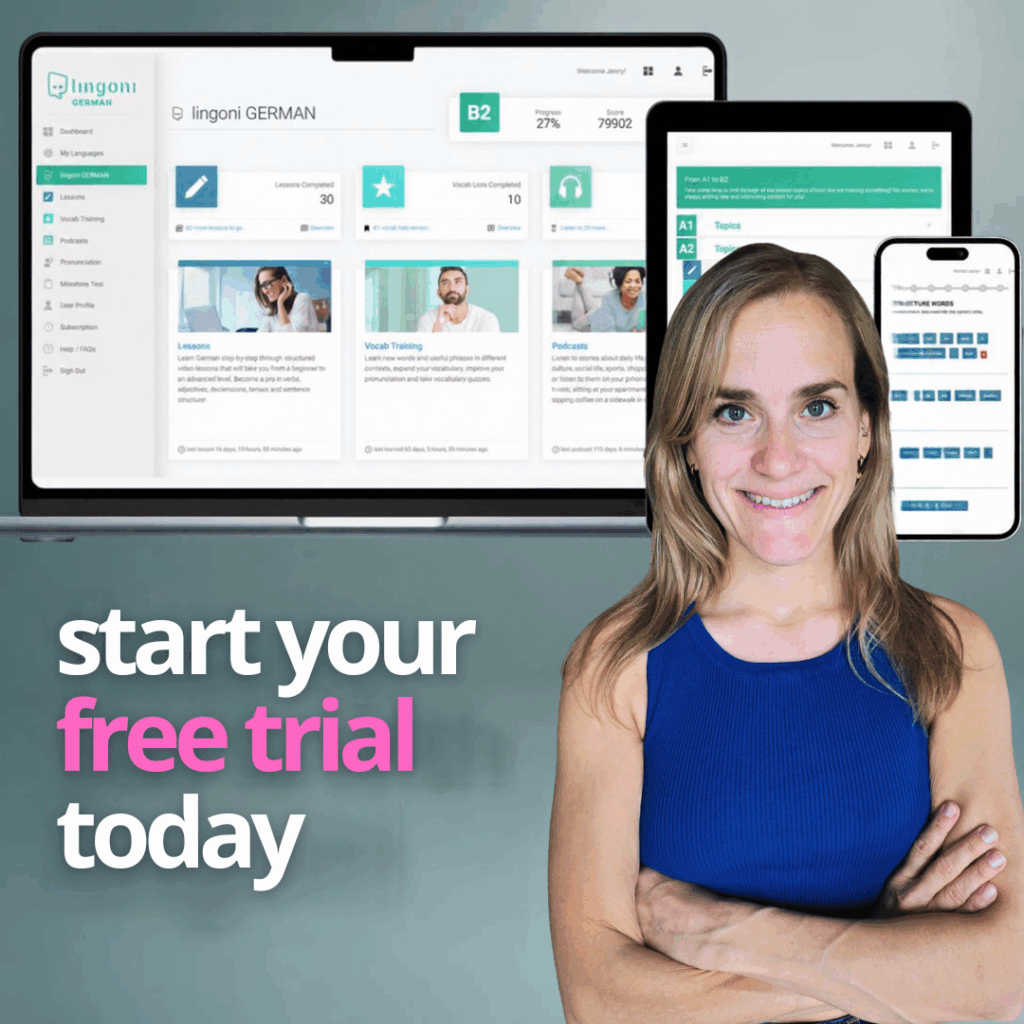
Preparing for a recognized German exam requires structured, level-appropriate content, not random YouTube videos or disconnected grammar exercises. At lingoni, we have built a learning path specifically designed for adult learners working toward real language goals.
- One structured learning path: select your level, for example A1, and access the relevant content in the intended order, from A1 to B2, covering all four language skills tested in Goethe, telc, DSH, and TestDaF exams
- Video lessons, podcasts, worksheets, and quizzes in every level, with completely revised worksheets that now include exercises based on common exam formats such as telc and Goethe
- Interactive exercises including gap-fill tasks, sentence building, listening comprehension, and picture description, formats directly relevant to exam preparation
- Milestone Tests at the end of each level to confirm readiness before moving forward, so you always know where you stand
- Self-paced learning that fits around work, family, and other commitments, with full visibility of completed and remaining lessons at any time
- Flexible plans: choose a monthly subscription that you can cancel at any time, or opt for the annual or Lifetime option, and start with a 7-day free trial
Whether you are starting from scratch at A1 or pushing toward the German B2 certificate required for your profession or visa, lingoni provides the structure and content to get there. Explore our German courses and start building toward the certificate that opens the next door for you.