

What Is the Goethe-Zertifikat and Who Should Take It?
If learning German is on your agenda, chances are you’ve come across the Goethe-Zertifikat at some point. It’s one of the most recognized German language certifications in the world, accepted by universities, employers, immigration authorities, and language schools across dozens of countries. But what exactly does the exam involve, who is it designed for, and how do you go about preparing for it? This guide walks through everything worth knowing before signing up.
The Goethe-Institut exam series is issued by the Goethe-Institut, a German cultural organization with exam centers in over 90 countries. Whether the goal is academic admission, a work visa, or simply personal achievement, the Goethe certificate carries real weight as proof of German language ability.
Goethe-Zertifikat Levels Explained
The Goethe-Zertifikat is not a single exam but a series of certifications aligned with the Common European Framework of Reference for Languages (CEFR). Each level corresponds to a defined stage of language proficiency, from complete beginner to near-native fluency.
- A1 and A2 cover basic communication skills, such as introducing yourself, understanding simple instructions, and handling everyday situations.
- B1 and B2 represent intermediate proficiency, where learners can navigate more complex conversations, express opinions, and understand longer written texts.
- C1 and C2 are advanced levels for those who need to operate professionally or academically in German at a high level.
For most learners pursuing study, work, or relocation goals in German-speaking countries, the B1 or B2 level is the most relevant target. B2 in particular is frequently required for university admission and skilled worker visa applications in Germany. Choosing the right Goethe exam level before registering is an important first step, since each level has its own format, duration, and preparation demands.
What the Exam Actually Tests

Each level of the Goethe-Zertifikat assesses four core language skills: reading, listening, writing, and speaking. These components are weighted differently depending on the level, but all four are present from A1 onward.
The reading section tests comprehension of written texts, ranging from short notices at lower levels to longer articles and formal documents at B2 and above. Listening tasks involve audio recordings of conversations, announcements, or interviews, with candidates answering multiple-choice or short-answer questions. The writing component requires producing texts such as emails, letters, or short essays, depending on the level. Finally, the speaking section is conducted face-to-face or via video and assesses the ability to hold a conversation, describe situations, and express and justify opinions.
One practical detail worth noting: the speaking section is often scheduled separately from the written components, and the format may vary slightly between exam centers. Checking the specific structure for the chosen level on the Goethe-Institut website before the exam date is always a good idea.
Who the Goethe-Zertifikat Is Designed For
The Goethe-Zertifikat is designed for non-native German speakers who need internationally recognized proof of their language ability. That said, the motivations behind taking it vary widely.
Learners with Academic Goals
Many German universities require a minimum German language certification for admission, particularly for degree programs taught in German. The B2 or C1 level is commonly requested, though requirements differ by institution and program. For those planning to study in Germany, the Goethe-Zertifikat is one of several accepted proofs of language ability, alongside the DSH and TestDaF.
Professionals and Those Relocating
Adults moving to Germany for work or family reasons often need to demonstrate German proficiency to immigration authorities or employers. The A1 certificate, for example, is sometimes required as part of a family reunification visa application. At higher levels, B1 or B2 can support applications for permanent residency or naturalization. For professionals in regulated fields such as healthcare or law, language certification requirements may be even more specific.
Learners Seeking Personal Milestones
Not everyone takes the exam for official purposes. Many learners use the German certification as a personal benchmark, a way to measure real progress and stay motivated throughout their language-learning journey. Having a concrete goal and a recognized credential at the end of it can make a significant difference in consistency and commitment.
Where and How to Register for the Exam
Registration for the Goethe-Zertifikat takes place through the official Goethe-Institut website or through authorized exam centers in the candidate’s country. The process is straightforward: select the exam level, find an available date and location, and complete the online registration form.
Exam fees vary depending on the country and level, so it’s worth checking the local Goethe-Institut website for current pricing. In many countries, the exam is offered multiple times per year, though popular dates can fill up quickly, especially at B1 and B2 levels. Registering several weeks in advance is advisable to secure a preferred slot. Some centers also offer online exam options for certain levels, which can be a convenient alternative for those without easy access to a physical test center.
How to Prepare Effectively for the Goethe-Zertifikat
Effective preparation for the German language exam comes down to consistent practice across all four skills, combined with familiarity with the specific format of the chosen level.
Working through official practice materials from the Goethe-Institut is one of the most reliable preparation strategies. These materials reflect the actual exam format and difficulty, which helps reduce surprises on test day. Beyond that, building strong reading and listening habits in German, such as reading German news articles or listening to German podcasts regularly, supports long-term comprehension development rather than just surface-level exam technique.
Speaking practice is often the area learners feel least confident about. Finding opportunities to speak German regularly, whether through language exchange partners, conversation groups, or structured courses, makes a real difference in exam performance. The speaking section rewards fluency and the ability to respond naturally under mild pressure, which only comes from regular practice rather than last-minute cramming.
Finally, understanding exactly what each section requires at the target level, including time limits, question types, and scoring criteria, removes uncertainty and allows preparation to be focused and efficient. Reviewing the examiner’s assessment criteria for the writing and speaking sections in particular is time well spent.
How lingoni Helps You Prepare for the Goethe-Zertifikat
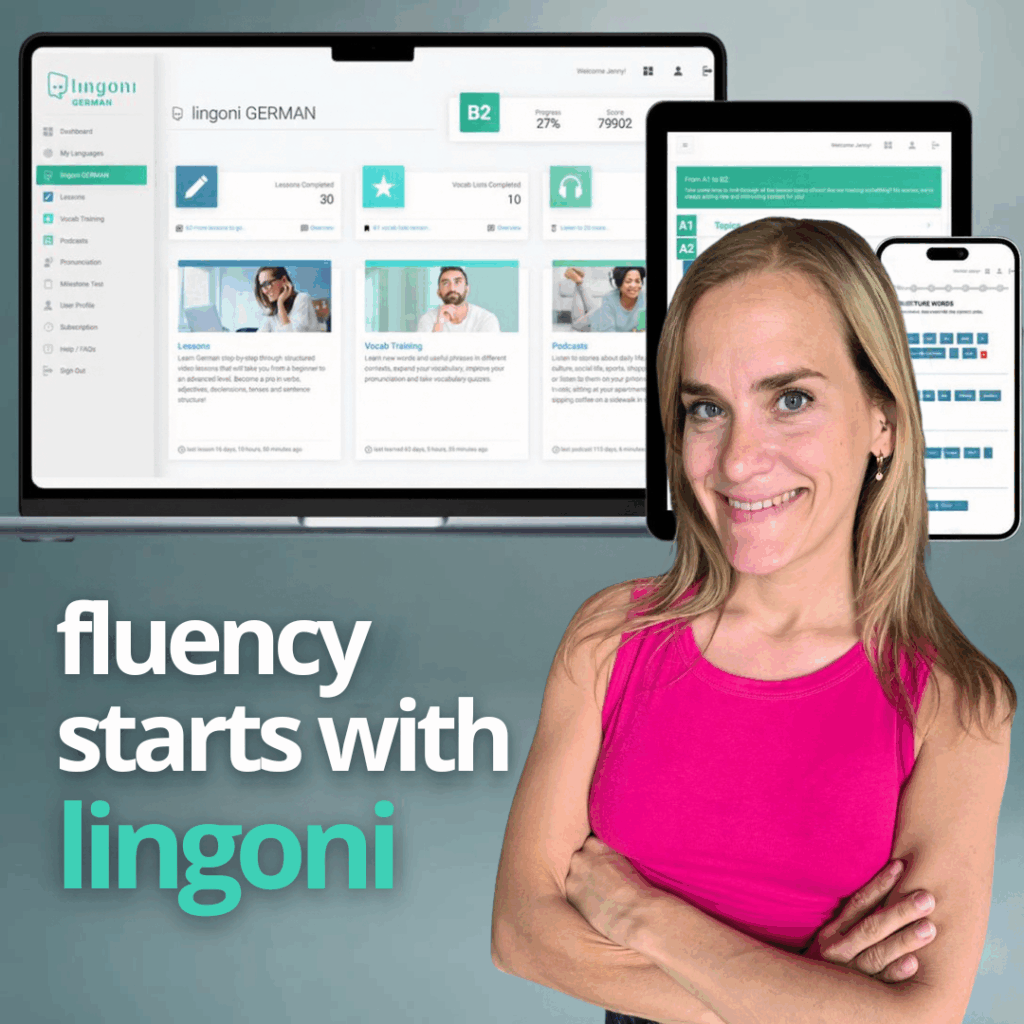
We built lingoni specifically to support structured, self-directed German learning from A1 to B2, which maps directly onto the most commonly taken Goethe exam levels. Learners select their level, for example A1, and access the relevant content in one structured learning path, in the intended order. Here’s what the platform offers for exam preparation:
- Structured lessons from A1 to B2, including video lessons, podcasts, worksheets, and quizzes covering reading, writing, listening, and speaking, the same four skills tested in the Goethe-Zertifikat.
- Revised worksheets that now also include exercises based on common exam formats, including telc and Goethe.
- Interactive exercises including gap fills, sentence building, picture descriptions, and error correction, all designed to build active language use rather than passive recognition.
- Milestone Tests at the end of each level to confirm readiness before moving on, giving a realistic picture of where you stand.
- Podcasts and vocab training to build listening comprehension and vocabulary depth over time.
Progress is entirely self-paced, so preparation can fit around work, study, or other commitments, without losing structure. A monthly subscription is available alongside the annual and Lifetime options, and it can be cancelled at any time. A 7-day free trial is also available. If you’re working toward a specific Goethe exam level, start learning German with lingoni and build the skills the exam actually tests, one level at a time.