

How do you switch jobs in Germany without losing your visa status?
Switching jobs in Germany is something thousands of expats and immigrants think about every year. Maybe you’ve found a better opportunity, a higher salary, or a role that fits your qualifications more closely. But the moment the question comes up, a familiar worry follows: will changing employers affect your visa? The good news is that a job change in Germany is often possible without losing your legal status, but the process depends heavily on the type of visa or residence permit you hold. Here’s what you need to know before you hand in your notice.
Can you switch jobs in Germany without losing your visa?
Yes, in most cases you can switch jobs in Germany without losing your visa status, but the rules vary depending on your permit type. Some residence permits are tied to a specific employer or job title, while others give you more flexibility. The important thing is to check the conditions printed on your residence permit before you accept a new offer.
Germany’s immigration law distinguishes between permits that are employer-specific and those that allow general employment. If your permit was issued for a particular job or employer, you will typically need to notify the immigration office (Ausländerbehörde) before or shortly after starting a new position. Failing to do this can put your legal status at risk, even if the job change itself would have been approved. So the process matters just as much as the outcome.
What visa types allow job changes in Germany?
The visa or residence permit type you hold determines how freely you can change employers. Some permits are highly flexible, while others require approval before you make a move.
- EU Blue Card: Allows job changes, but with conditions depending on how long you have held the card. In the first two years, you need prior approval from the Ausländerbehörde before switching. After two years, you can change jobs freely without prior approval, though you should still inform the office.
- Skilled Worker Residence Permit (§ 18b AufenthG): Generally tied to the occupation listed on the permit, not a specific employer. You can switch to a new employer in the same qualified field, but major changes in job category may require a new application.
- Job Seeker Visa: Does not allow employment until you convert it to a work permit, so switching is not applicable until you have secured and registered a position.
- Settlement Permit (Niederlassungserlaubnis): Gives you the most freedom. Once you hold a settlement permit, you can work in any job without restrictions.
- ICT Card (Intra-Company Transfer): Tied specifically to the company that sponsored your transfer. Changing employers would require a completely new application.
When in doubt, read the conditions noted on your current residence permit and consult the Ausländerbehörde in your city before making any move.
How do you notify the immigration office when changing jobs?

When you need to notify the Ausländerbehörde about a job change, you typically do so by submitting a written request or attending an appointment at your local office. You will usually need to bring your current residence permit, your new employment contract, proof of your qualifications, and evidence that your new salary meets the minimum threshold required for your permit type.
The process varies slightly by city, as each Ausländerbehörde has its own procedures and waiting times. In larger cities like Berlin, Munich, or Hamburg, appointments can take weeks to secure, so plan ahead. Some offices allow you to submit documents digitally or by post, which can save time.
Key documents to prepare:
- Your valid residence permit
- Your new employment contract (signed by both parties)
- Your academic or professional qualification certificates
- Proof that your new salary meets the legal minimum for your permit category
- Your passport
- A completed application form (available from your local Ausländerbehörde)
If you are switching jobs during the first two years of an EU Blue Card, you must receive written approval before starting your new role. Starting work without this approval is a legal violation, even if the approval eventually comes through.
What happens to your EU Blue Card if you change employers?
If you change employers during the first two years of holding an EU Blue Card, you need prior approval from the Ausländerbehörde. Your new employer and role must still meet the Blue Card requirements, meaning the position must be in a qualified profession and the salary must meet or exceed the current legal minimum threshold. Once approved, your Blue Card remains valid and is typically updated or reissued to reflect the new employer.
After you have held the EU Blue Card for two years, the rules become much simpler. You can change employers without prior approval, though informing the Ausländerbehörde is still recommended good practice. The new job must still be a qualified position, but the process no longer requires you to wait for a decision before you start.
One important note: if your new salary falls below the required minimum or the role does not qualify as skilled work under German law, your Blue Card could be revoked. Always verify the current salary thresholds, which are updated periodically, before accepting an offer.
What are the most common mistakes when switching jobs on a German visa?
The most common mistakes when changing jobs on a German visa are starting a new role without prior approval when it is required, failing to notify the Ausländerbehörde at all, and accepting a position that does not meet the legal requirements of your permit type. Each of these errors can lead to serious consequences, including permit revocation.
Here are the mistakes to avoid:
- Starting work too early: If your permit requires prior approval (as with an EU Blue Card in the first two years), starting the new job before receiving written confirmation is a violation of your permit conditions.
- Ignoring salary thresholds: Many work permits require your salary to meet a minimum. A lateral move to a lower-paying role can put your permit at risk.
- Changing fields entirely: If your permit is tied to a specific profession or qualification, switching to a completely different industry may require a new application rather than a simple notification.
- Not updating your registration: Beyond the Ausländerbehörde, you may also need to update your address registration (Anmeldung) if you are relocating for the new job.
- Assuming your employer handles it: Many employers in Germany are helpful, but the legal responsibility for maintaining your visa status is yours, not your employer’s.
How does German language ability affect your job switch?
German language ability can significantly affect your chances of successfully switching jobs in Germany, both practically and legally. While the immigration process itself does not always require a language certificate for skilled worker permits, many employers expect at least B1 or B2 level German for roles that involve client contact, teamwork, or communication in German-speaking environments.
In some regulated professions, such as medicine, nursing, or teaching, German language certification is a legal requirement to have your qualifications recognized and to receive a work permit. Without the required language level, you cannot legally work in those fields, which limits your job change options significantly.
Beyond the legal side, stronger German skills open more doors. Candidates who can communicate confidently in German are more competitive, especially when moving to a role with greater responsibility or into a new industry. Integration into a new team also becomes much smoother when you can follow meetings, read contracts, and handle daily communication without relying on colleagues to translate.
If you are planning a job change and your German is not yet where you want it to be, investing time in structured language learning before you start applying is a practical move. Even reaching B1 level can noticeably expand the range of positions available to you.
How lingoni helps you prepare for working in Germany
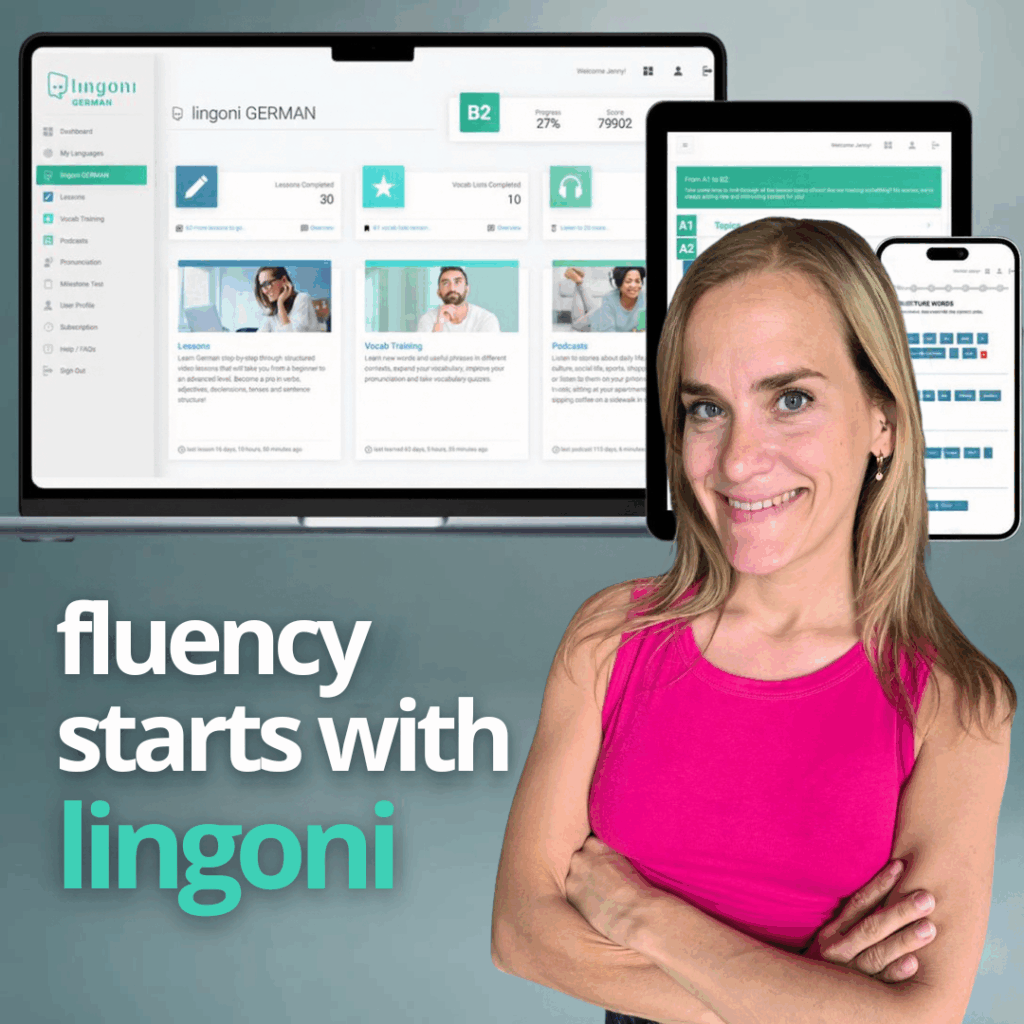
If you are navigating a job change in Germany and want to strengthen your German at the same time, we built lingoni specifically for motivated adult learners in exactly that situation. Here is what you get:
- Structured learning from A1 to B2: Whether you are starting from scratch or already have some German, you can begin at your level and progress step by step through video lessons, worksheets, podcasts, and interactive exercises.
- Milestone Tests to skip ahead: If you already have some German knowledge, you do not need to start at A1. Take a Milestone Test to jump directly to your current level and save time.
- Practical, real-life German: Our lessons focus on the kind of German you actually need at work and in daily life, not just textbook grammar.
- Self-directed pace: You learn when it fits your schedule, whether that is during a commute, a lunch break, or an evening at home.
- Exam preparation: If your new employer or visa application requires a certified language level (such as Goethe or telc), our courses cover the content you need to prepare.
If improving your German is part of your plan for a successful job change in Germany, explore our German course and start building the language skills that will support your next career step.