
How Do You Prepare for the German Medical Language Exam?
The Fachsprachprüfung is one of the most demanding hurdles in a medical career path in Germany. For internationally qualified doctors, dentists, and other healthcare professionals, passing this German medical language exam is a legal requirement before receiving full professional recognition. Unlike a general language certificate, the Fachsprachprüfung tests highly specific communication skills in a clinical setting, which means standard German courses alone will not get you there. Targeted, structured preparation makes all the difference.
Whether you are sitting the exam in 2026 or planning ahead, this guide walks through every major aspect of medical German exam preparation, from the exam format and vocabulary priorities to role-play practice, case presentations, and building a realistic study plan around a demanding work schedule.
What the Fachsprachprüfung Actually Tests
The Fachsprachprüfung is not a written grammar test. It is a spoken, scenario-based assessment conducted by a panel of examiners, typically from the regional medical association (Ärztekammer). The exam evaluates whether a doctor can communicate safely and professionally with patients and colleagues in German.
The assessment usually consists of three interconnected parts: a doctor-patient consultation role play, a case presentation to a colleague or superior, and a follow-up discussion about the case. Examiners are looking for accurate medical terminology, clear and empathetic communication with patients, and the ability to summarize clinical information in a structured, professional way. Language errors that could lead to misunderstandings in a real clinical context are penalized most heavily.
Medical Vocabulary You Need to Master First
Before practicing conversations, building a solid medical vocabulary base is essential. The German medical language exam requires fluency across several vocabulary categories that go well beyond everyday German.
Focus on these core areas first:
- Symptoms and complaints — both the formal medical terms (Dyspnoe, Emesis) and the everyday expressions patients actually use (Atemnot, Erbrechen)
- Body systems and anatomy — particularly the cardiovascular, respiratory, gastrointestinal, and musculoskeletal systems
- Medical history terminology — phrases for anamnesis, including family history, medication history, and allergies
- Diagnostic and treatment language — how to explain procedures, findings, and next steps clearly to a patient
- Documentation phrases — the formal language used when presenting a case to a colleague
A practical approach is to learn vocabulary in context rather than as isolated word lists. Study sample consultation transcripts, read clinical case descriptions in German, and actively use new terms in spoken practice as soon as possible.
How to Practice the Doctor-Patient Role Play

The role-play section is where many candidates lose marks, not because of vocabulary gaps, but because of communication style. In German clinical culture, the consultation follows a recognizable structure, and deviating from it can signal a lack of professional training.
A well-executed role play typically moves through these stages: greeting and introducing yourself, explaining the purpose of the consultation, taking a structured patient history (Anamnese), performing a targeted examination or describing what you would examine, and closing with an explanation of next steps. Practicing this sequence repeatedly until it feels automatic is the most effective preparation strategy.
Find a practice partner, ideally a native German speaker or a fellow candidate, and simulate real consultations using case scenarios. Record yourself to identify filler words, unclear explanations, or moments where you switch back to English. Pay particular attention to how you phrase questions to patients: open-ended questions first (Was führt Sie zu mir?), then more targeted follow-ups. Empathetic language matters too — examiners notice whether you acknowledge a patient’s concerns or rush past them.
Structuring a Clear Case Presentation in German
The case presentation section tests a different skill set from the role play. Here, the candidate presents the patient case concisely and professionally to a colleague or examiner acting as a superior. This requires a formal register and a logical structure that mirrors real clinical handover conventions.
A strong case presentation in German follows this sequence:
- Patient identification — age, gender, reason for presentation
- Chief complaint — the main symptom or concern in clinical language
- Medical history — relevant past illnesses, surgeries, medications, allergies
- Current findings — what the examination revealed
- Suspected diagnosis — your clinical assessment with brief reasoning
- Proposed next steps — further diagnostics or treatment plan
Practice presenting cases within a strict time limit — around two to three minutes is typical. Avoid padding with unnecessary detail. Examiners reward candidates who can distill a complex case into clear, prioritized information without losing clinical accuracy.
Common Mistakes That Cost Marks on Exam Day
Understanding where candidates typically go wrong is just as valuable as knowing what to do right. Several recurring errors appear across Fachsprachprüfung assessments.
Mixing registers is one of the most common problems. Using overly technical Latin-based terms with a patient, or conversely using informal language during a case presentation, signals a lack of situational awareness. The exam tests whether you can shift registers appropriately depending on your audience.
Another frequent issue is incomplete anamnesis. Candidates who focus on the presenting complaint but forget to ask about medication, allergies, or family history leave clinical gaps that examiners notice. Develop a mental checklist and practice running through it naturally within a conversation rather than as a rigid questionnaire.
Finally, many candidates underestimate the importance of pronunciation and prosody. Unclear pronunciation of key medical terms, or a monotone delivery that makes it hard to follow the structure of a case presentation, can affect how examiners perceive overall competence. Regular speaking practice — not just reading — is non-negotiable.
Building a Study Plan Around Your Work Schedule
Most candidates preparing for the German language exam for doctors are simultaneously working, often in a clinical role. This means study time is limited and must be used efficiently.
A realistic preparation timeline depends on your current German level. If you are already at B2 in general German, a focused three-to-four-month plan targeting medical language specifically is achievable. If you are still building general language skills, allow more time before shifting to exam-specific preparation.
Structure your weekly study sessions around these priorities:
- Daily vocabulary review — 15 to 20 minutes using spaced repetition or themed word sets from clinical contexts
- Two to three speaking sessions per week — role-play practice with a partner or tutor, focusing on different case types each time
- Weekly case presentation practice — timed, recorded, and reviewed critically
- Listening exposure — German medical podcasts, clinical case discussions, or patient consultation recordings where available
Consistency matters more than intensity. Thirty focused minutes daily outperform a single three-hour session once a week. Build the habit of thinking in German during clinical work — mentally narrating what you observe, or rehearsing how you would explain a finding to a patient.
How lingoni Supports Medical German Exam Preparation
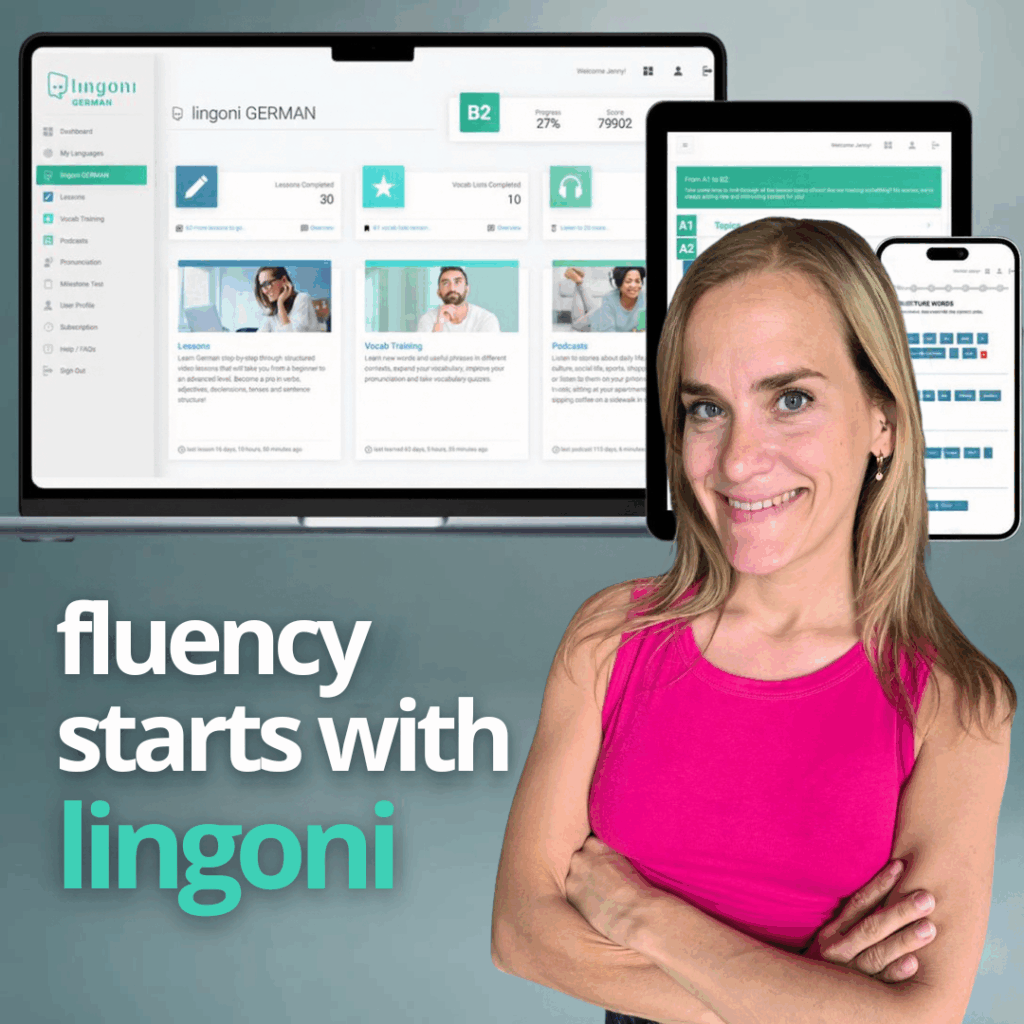
Preparing for the Fachsprachprüfung requires a strong general German foundation before medical-specific practice can truly take hold. That is where we come in. lingoni offers structured German learning from A1 to B2, with content designed to build the language skills that underpin professional communication.
Here is what the platform provides to support your preparation:
- One structured learning path from A1 to B2 — select your level, for example A1, and work through the relevant content in the intended order, with each level unlocked after completing a Milestone Test
- Videos, podcasts, worksheets, and quizzes — including listening tasks, sentence building, and error correction that sharpen the skills the Fachsprachprüfung demands
- Revised worksheets with exam-format exercises — the worksheets now include exercises based on common German exam formats such as telc and Goethe, which helps you get used to formal exam-style tasks
- Flexible self-paced learning — study around shift work or clinical hours without losing momentum
- Flexible subscription options — choose a monthly subscription that you can cancel at any time, or opt for an annual or Lifetime plan, and start with a 7-day free trial
- Track your progress clearly — see exactly which lessons are completed and which remain, so you always know where you stand
If your German is still developing and you want a reliable, structured path to the level required for the exam, learning German with lingoni gives you a clear, self-directed route from beginner to B2 — built around real progress, not guesswork.