
How Do You Practise Listening for a German Language Exam?
The listening section of a German language exam is often the one that catches learners off guard. Unlike reading, where you can pause and re-read, listening tasks move at their own pace and leave no room for hesitation. Whether you are preparing for the Goethe exam, telc, DSH, or TestDaF, building strong German listening comprehension takes deliberate, structured practice, not just passive exposure to the language.
The good news is that practising listening for a German exam is a skill that can be developed systematically. With the right habits, techniques, and an honest understanding of where learners typically go wrong, it is entirely possible to walk into the exam room feeling genuinely prepared.
What German exam listening sections actually test
German language exam listening tasks are not simply testing whether you can understand every word. They assess a broader set of comprehension skills that require both linguistic knowledge and cognitive focus.
Across exams like Goethe, telc, DSH, and TestDaF, the listening section typically includes a mix of formats: short dialogues, longer monologues, news-style reports, interviews, and academic lectures. What examiners are looking for includes:
- Identifying the main idea of a spoken passage without getting lost in detail
- Extracting specific information such as times, names, or key facts
- Understanding speaker attitude or intention, particularly in dialogues
- Following complex arguments in academic or formal registers, especially at B2 and above
Understanding what is being assessed changes how you practise. Aimless listening, putting on a German podcast while doing other tasks, builds familiarity with the language, but it does not train the focused attention that exam conditions demand.
Listening habits that build real exam readiness

Consistent, intentional listening habits are what separate learners who improve steadily from those who plateau. The key is regularity and variety rather than occasional long sessions.
Exposing yourself to a range of spoken German formats is particularly important for exam preparation. News broadcasts, radio interviews, academic talks, and everyday conversations all appear in different exam formats, and each has its own rhythm, vocabulary, and register. Rotating between these formats over weeks builds the adaptability that exams require.
It is also worth paying attention to speed. Native German speech in formal contexts, such as a DSH listening text or a TestDaF academic lecture, tends to be measured and clear. But telc and Goethe exam materials often include more natural, conversational speech with contractions, reduced syllables, and overlapping ideas. Training your ear across both registers is essential for German listening skills that hold up under pressure.
Active listening techniques for German comprehension
Passive listening builds background familiarity, but active listening is what sharpens comprehension. The difference lies in how deliberately you engage with the material.
Pre-listening: use the preparation time
Most German exams give you a short window before the audio begins to read the questions. Use this time strategically. Scan the questions, identify keywords, and form a mental picture of what the text is likely to be about. This primes your brain to filter for relevant information rather than trying to process everything equally.
During listening: note-taking and focus
Train yourself to jot down brief notes while listening, particularly for longer passages. Write down numbers, names, and key terms rather than full sentences. After the audio ends, use your notes to reconstruct meaning rather than relying on memory alone.
Post-listening: review and reflect
When practising at home, always review what you missed and why. Was it unfamiliar vocabulary? A structural pattern you did not follow? Speed? Identifying the specific gap is far more useful than simply replaying the audio and hoping for a better result.
Common mistakes that cost marks in listening tasks
Even well-prepared learners lose marks in the listening section for reasons that have nothing to do with their actual German ability. Awareness of these patterns can prevent avoidable errors.
One of the most common mistakes is fixating on a missed word or phrase. When something is unclear, some learners mentally freeze on it and miss the next several sentences as a result. Exam listening requires the ability to let go of what you did not catch and stay with the flow of the text.
Another frequent error is answering based on what you expected to hear rather than what was actually said. Exam audio is often designed to include deliberate distractors, a speaker might mention something that sounds like the correct answer before correcting themselves or changing direction. Listening carefully to the full passage before committing to an answer is always the safer approach.
Finally, many learners underestimate the impact of unfamiliar vocabulary in context. You do not need to understand every word, but you do need enough vocabulary range to infer meaning from surrounding context. Targeted vocabulary work at the right level makes a significant difference here.
How structured practice tools sharpen listening skills
Unstructured exposure to German audio is a useful supplement, but it rarely produces the kind of focused improvement that exam preparation requires. Structured practice, where listening tasks are tied to specific comprehension objectives and followed by feedback, accelerates progress in a way that casual listening cannot replicate.
Podcasts designed for learners at specific CEFR levels offer a particularly effective format. They combine authentic-sounding German with controlled vocabulary and clear structure, making them ideal for building both comprehension and confidence. Pairing podcast listening with written exercises that test understanding reinforces the connection between what you hear and what you retain.
Practice tests that replicate actual exam formats are also essential in the final weeks before an exam. Timing yourself, working under realistic conditions, and reviewing your answers critically builds the mental stamina that exam day demands.
How lingoni supports German listening exam preparation
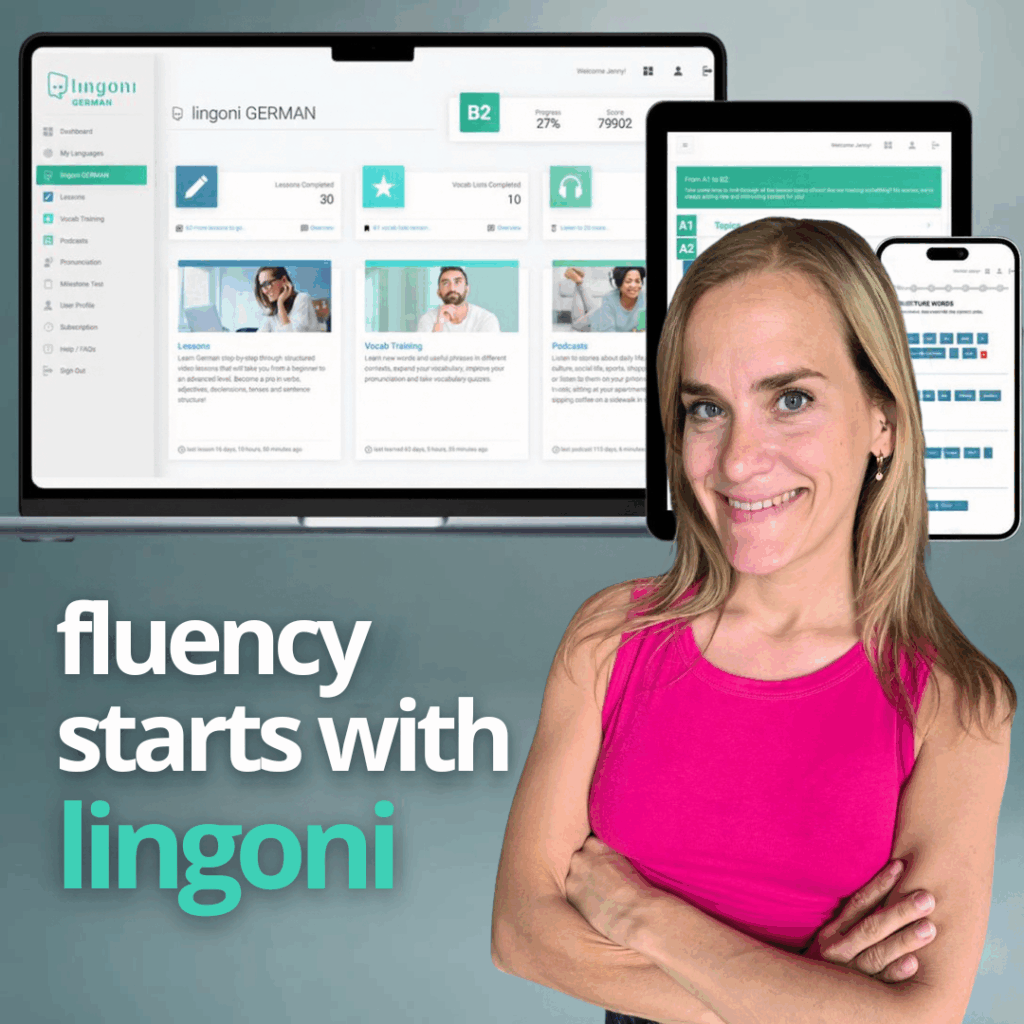
At lingoni, we have built our German learning content around exactly the kind of structured, level-appropriate practice that exam preparation requires. You select your level, for example A1, and work through the relevant content in one structured learning path, in the intended order. Our platform covers levels A1 through B2, and the learning path includes video lessons, podcasts, worksheets, and quizzes.
- Podcasts with comprehension exercises that train active listening at your current level
- Interactive listening tasks including gap-fill, sentence building, and error correction exercises
- Completely revised worksheets that now include exercises based on common exam formats such as telc and Goethe
- Level-appropriate vocabulary training to close the gaps that affect comprehension in exam conditions
- Milestone Tests at the end of each level that confirm you are genuinely ready to move forward
Progress is self-directed and transparent, you can see exactly how many lessons you have completed and what remains at each level, so there are no surprises. If you are already at an intermediate level, milestone tests let you jump straight to the right starting point without repeating material you already know.
If you are serious about passing your German language exam in 2026, structured listening practice from the right level is one of the most effective investments you can make. A 7-day free trial is available, and you can choose a monthly subscription that can be cancelled at any time, an annual plan, or Lifetime access. Start your German preparation with lingoni and build the listening skills that hold up when it counts.
Related Articles
- Which German Language Exams Are Officially Recognized in Germany?
- What is the difference between a Ausbildung and a university degree in the German job market?
- How do you prove your German language level to a German employer in 2026?
- What are the unwritten rules of German workplace culture foreigners often miss?
- What is the German etiquette for workplace communication?